The new era of work
“We are the last generation managing only humans.”
 (1).png)
People
Career Ventures brings together a global community of Advisory Partners — experts across sectors and disciplines shaping the conversations that define the next era of work.
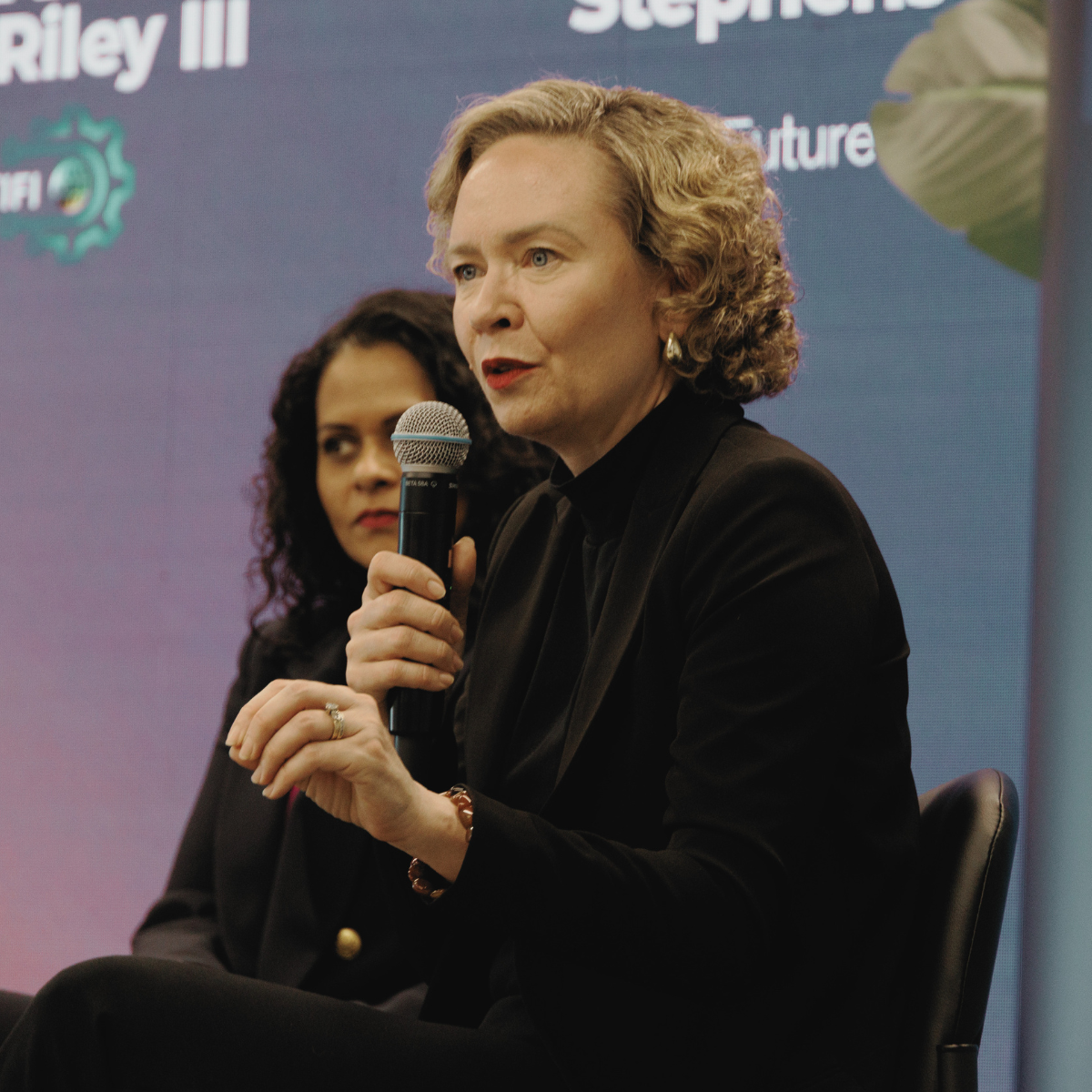
“We are the last generation managing only humans.”
01 · Our focus
Careers are in motion. The lifelong employer is giving way to portfolio careers and fractional engagements, each one a chapter in a life of continuous reinvention.
Knowledge workers are becoming knowledge owners — carrying their experience, frameworks, and tacit insight with them as portable assets across decades of work.
How careers move when work is no longer in one place.
02 · Our focus
Leadership is being redefined in real time. Leaders are now responsible for hybrid teams of humans and AI agents, and for decisions increasingly mediated by intelligent systems.
The early signals of quantum and post-AI computing are already arriving on their desks. What leadership becomes when exponential change is the operating condition.
Leading organizations that are part human, part machine.
03 · Our focus
The bottom rungs of the career ladder are the first to feel the shift. Entry-level work, apprenticeship paths, and early-career formation are being absorbed and reorganized by intelligent systems.
The next generation of professionals is digitally native and AI-fluent. How they enter the workforce will reshape the institutions they join.
The first AI-native generation, and the work that remains theirs to do.
04 · Our focus
Entire workforces are now in transition. New categories of work are emerging as quickly as old ones are being absorbed.
The institutions built to manage employment — companies, learning systems, labor policy — are running to catch up. The labor economics of exponential change.
When transitions happen multiple times across a single career.
05 · Our focus
As intelligent systems take on more of what we used to call work, the deeper question returns: who are we, and what is uniquely ours to do?
The emotional and existential dimension of the transition — questions of identity and meaning, and the parts of human experience that do not reduce to a task.
What becomes more important when efficiency is solved.
Advisory Partners